House Cleaning Tips for Allergy Season in Idaho
If your eyes start itching the moment the trees leaf out, you already know Idaho allergy season is no joke. Here in the Treasure Valley, seasonal allergies usually kick off in late February or early March and don't fully let up until the first hard frost, often not until late October. That's the better part of the year spent breathing air loaded with tree pollen, grass pollen, and the fine high-desert dust that blows in off open land and farm fields.
The frustrating part is that closing your windows only does so much. Pollen and dust ride in on shoes, clothes, pets, and every gust through an open door, then settle into carpet, bedding, and soft furnishings where they build up all season. Your home can quietly become the place your symptoms are worst — but it can also be the one place you get real relief, if you clean it the right way.
This guide walks through a cleaning routine built for Idaho's specific allergy triggers: when local pollen peaks, how to trap allergens instead of stirring them back into the air, and why chemical-free cleaning matters when your airways are already irritated. We're a chemical-free house cleaning company based in Meridian, and if you'd rather hand the deep work off, you can reach us at +1 877-754-5614.
In this article
- 1. Idaho's Allergy Calendar: What Peaks and When
- 2. Damp-Dust and Vacuum with HEPA — Don't Just Move Dust Around
- 3. Wash Bedding and Soft Furnishings on a Schedule
- 4. Floors, Air Filters, and Airflow
- 5. Why Chemical-Free Cleaning Matters More During Allergy Season
- 6. Let Us Reset Your Home for Allergy Season
Idaho's Allergy Calendar: What Peaks and When
Knowing what's in the air helps you clean ahead of it instead of chasing symptoms. Idaho's dry, windy climate makes things worse than a lot of the country — wind carries pollen long distances and keeps it airborne, so it travels straight into your home and settles on every surface. Allergists in the Boise area generally point to three waves through the season.
The takeaway: the allergens change through the year, but the cleaning problem stays the same. Whatever is in the air outside is being tracked and blown into your home, where it accumulates in the places you spend the most time. Timing your deepest cleaning to the front edge of each wave keeps the load from building.
- Spring (March–May): Tree pollen dominates. Around the Treasure Valley that means juniper, cottonwood, ash, maple, mulberry, and willow — juniper in particular is an early and heavy trigger for a lot of Idahoans.
- Summer (June–August): Grass pollen takes over, with Kentucky bluegrass, ryegrass, timothy, and orchard grass peaking around June. Grass seed farming across the valley makes this an especially strong season here.
- Late summer into fall (August–October): Ragweed and sagebrush move in and hold on until the first frost finally clears the air.
Damp-Dust and Vacuum with HEPA — Don't Just Move Dust Around
The single biggest mistake during allergy season is dry-dusting. A dry cloth or a feather duster lifts pollen and dust off a surface and throws it right back into the air you breathe, where it hangs for minutes and then resettles. It looks like cleaning, but you've mostly relocated the problem.
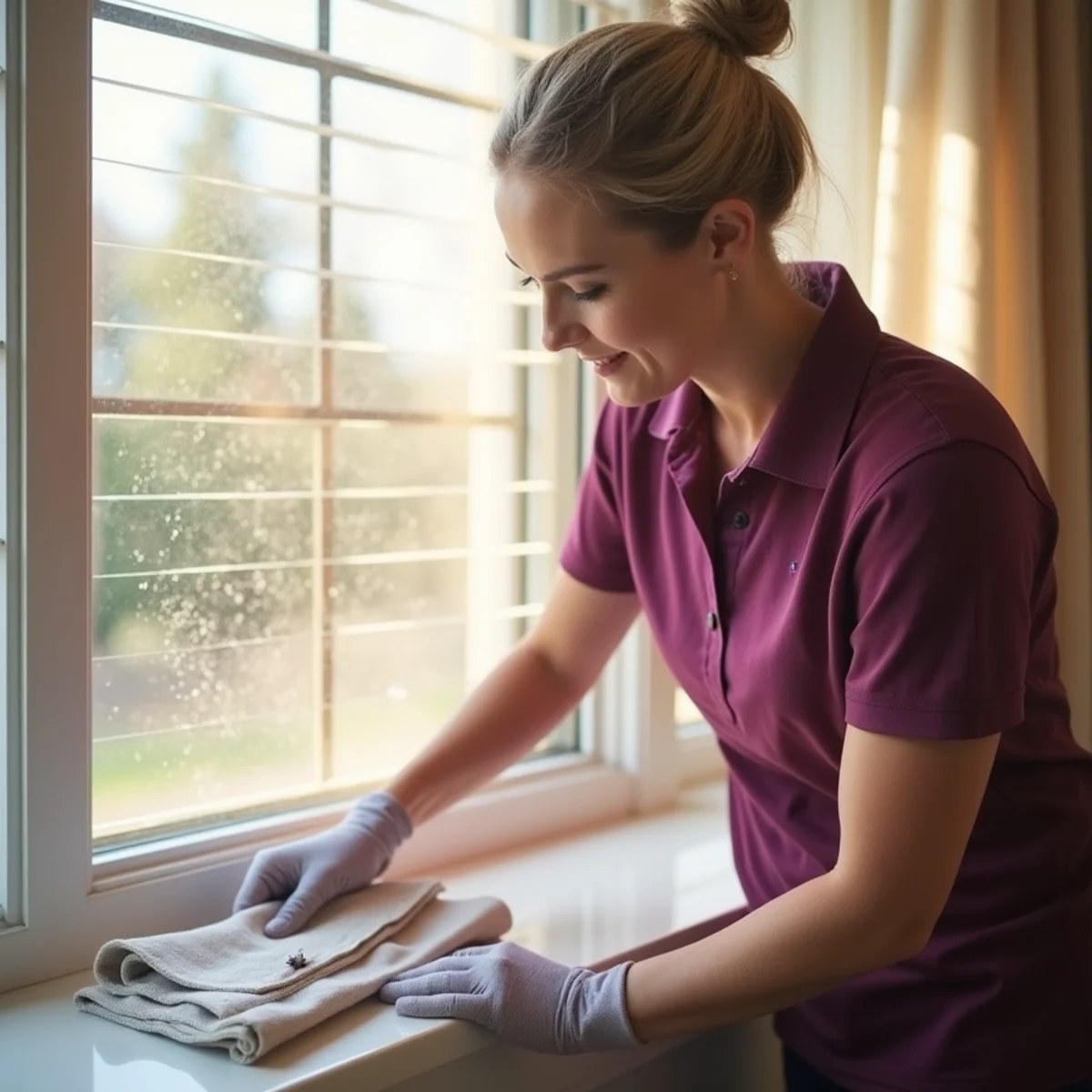
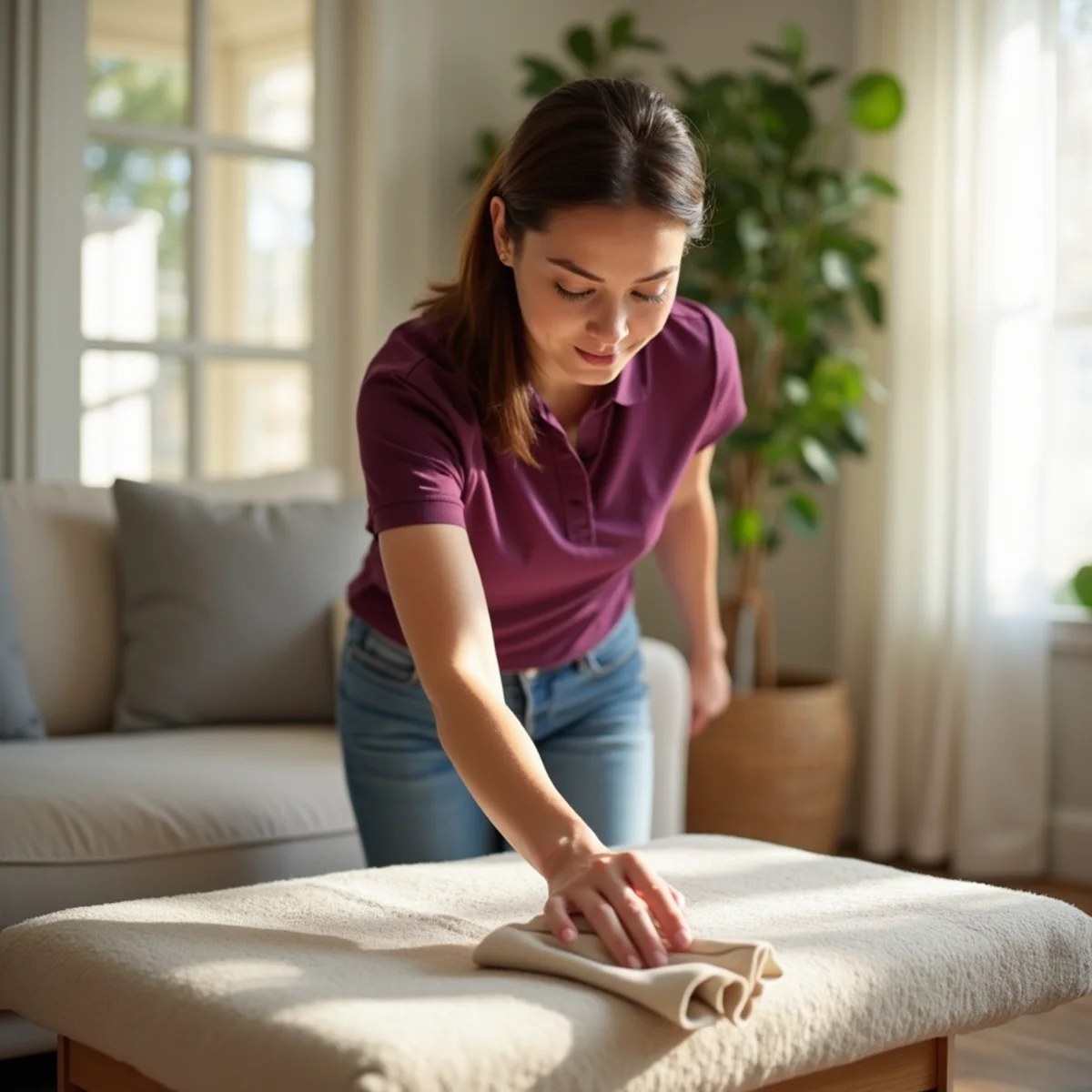
The fix is to trap allergens instead of stirring them. Damp-dust every hard surface with a slightly wet microfiber cloth so particles cling to the cloth and go into the rinse water, not back into the air. Wipe top to bottom — ledges, sills, shelves, and baseboards — so anything you knock loose lands on a surface you haven't cleaned yet. For floors, pair that with a vacuum that has a true HEPA filter, which captures the fine pollen and dust-mite particles a standard vacuum blows straight through its exhaust.
This is also where the details people skip make the biggest difference for allergies. Window tracks, blinds, ceiling fan blades, and the tops of door frames collect pollen all season and quietly re-seed the room every time the air moves. Our deep cleaning hits exactly these overlooked spots, which is why a deep clean at the start of allergy season resets a home so noticeably.
- Use damp microfiber, never dry — it holds allergens instead of scattering them.
- Vacuum with a HEPA filter at least weekly, more in peak season, going slowly over carpet and rugs.
- Don't forget vertical surfaces — blinds, window tracks, sills, and fan blades are pollen magnets.
- Empty the vacuum outside so you're not releasing everything you just captured back indoors.
Wash Bedding and Soft Furnishings on a Schedule
You spend roughly a third of your life in your bed, with your face pressed into fabric — which makes bedding the most important allergy surface in the house. Beyond the pollen that drifts in, mattresses and pillows harbor dust mites, microscopic creatures whose waste is one of the most common year-round indoor allergy triggers. They thrive in the warm, humid pocket of a slept-in bed.
The good news is that dust mites and settled pollen wash out with heat. Launder sheets and pillowcases weekly in hot water — around 130°F is the temperature widely recommended to actually kill dust mites rather than just rinse them around. Wash comforters, blankets, and mattress protectors on a regular rotation too, and consider allergen-proof zip covers on mattresses and pillows as a barrier that keeps mites from settling in the first place.
Soft surfaces beyond the bed matter just as much. Upholstered couches, throw pillows, curtains, and area rugs all act like filters that trap allergens and release them when disturbed. Wash or vacuum them regularly, and if the buildup runs deep, our carpet and rug cleaning pulls out the embedded pollen and dander a household vacuum can't reach.
- Sheets and pillowcases: hot wash weekly during allergy season.
- Comforters, blankets, mattress covers: every two to four weeks.
- Curtains and drapes: wash or launder monthly, or swap heavy drapes for washable blinds.
- Throw pillows and soft toys: wash regularly, or reduce clutter that collects dust.
Floors, Air Filters, and Airflow
Allergens settle downward, so your floors are the last stop for everything in the air — and hard floors are far easier to keep allergen-free than carpet. Damp-mop tile, laminate, and hardwood a few times a week during peak season so the fine layer of pollen and dust that lands overnight never gets a chance to build. A dry sweep or dust mop just kicks it back up, so always finish with a damp pass.
Your HVAC system is the other half of the equation, and it's easy to forget. That furnace or AC filter is pulling household air through it constantly, so a clogged or low-grade filter lets allergens recirculate through every room. Check it monthly through allergy season and replace it on schedule with a filter rated to catch fine particles. A standalone HEPA air purifier in the bedroom is a worthwhile addition too, quietly scrubbing pollen and dander out of the air while you sleep.
Airflow habits round it out. On high-pollen days — hot, dry, and windy is the worst combination in Idaho — keep windows shut and lean on the AC instead. Set up a shoe-off zone by the door and a spot to hang jackets, because footwear and clothing are how most outdoor pollen gets tracked in. And wipe down or bathe pets that spend time outside, since dander and the pollen caught in their fur both add to the indoor load.
Why Chemical-Free Cleaning Matters More During Allergy Season
When your airways are already inflamed from pollen, the last thing they need is a lungful of cleaning-product fumes. Many conventional cleaners and "fresh scent" sprays release strong fragrances and volatile compounds that irritate sensitive noses, throats, and eyes — layering a chemical trigger on top of the seasonal one you're already fighting.
This is exactly why we clean chemical-free, with no added fragrance irritants. It's the thing our customers mention most: no harsh fumes, no lingering chemical smell, no headache after we leave — just genuinely clean air. During allergy season that isn't a nice-to-have, it's the whole point. You're trying to reduce what your body reacts to, not swap one irritant for another.
Chemical-free doesn't mean less clean, either. The work that actually reduces allergens is mechanical — trapping and removing particles with damp microfiber, HEPA vacuuming, and hot-water laundering — not dousing surfaces in something harsh. Done right, a chemical-free clean removes more of what's making you miserable while leaving the air genuinely easier to breathe.
Let Us Reset Your Home for Allergy Season
A thorough reset at the front of allergy season pays off for months. Stripping out the season's accumulated pollen, dust, and dander in one deep pass gives you a clean baseline that a simple weekly routine can hold — instead of falling further behind week after week as the buildup grows.
That's where handing it off helps. Our deep cleaning targets the allergen hotspots most people skip — blinds, tracks, baseboards, ceiling fans, and the tops of everything — with damp microfiber and HEPA-filtered vacuums, chemical-free from start to finish. A standing recurring visit then keeps the allergen load down through the whole season without eating your weekends. Clearer window glass and tracks help too, since sills and tracks are where pollen quietly collects.
We clean chemical-free across Meridian, Boise, Nampa, and Eagle, so we know exactly what the Treasure Valley's dry, windy, dust-heavy seasons do to a home. If allergy season has your house working against you, call +1 877-754-5614 or request a free quote, and we'll get your home genuinely clean — and easier to breathe in.
Want it done for you?
Chemical-free house cleaning across Idaho. Free quotes, no obligation.