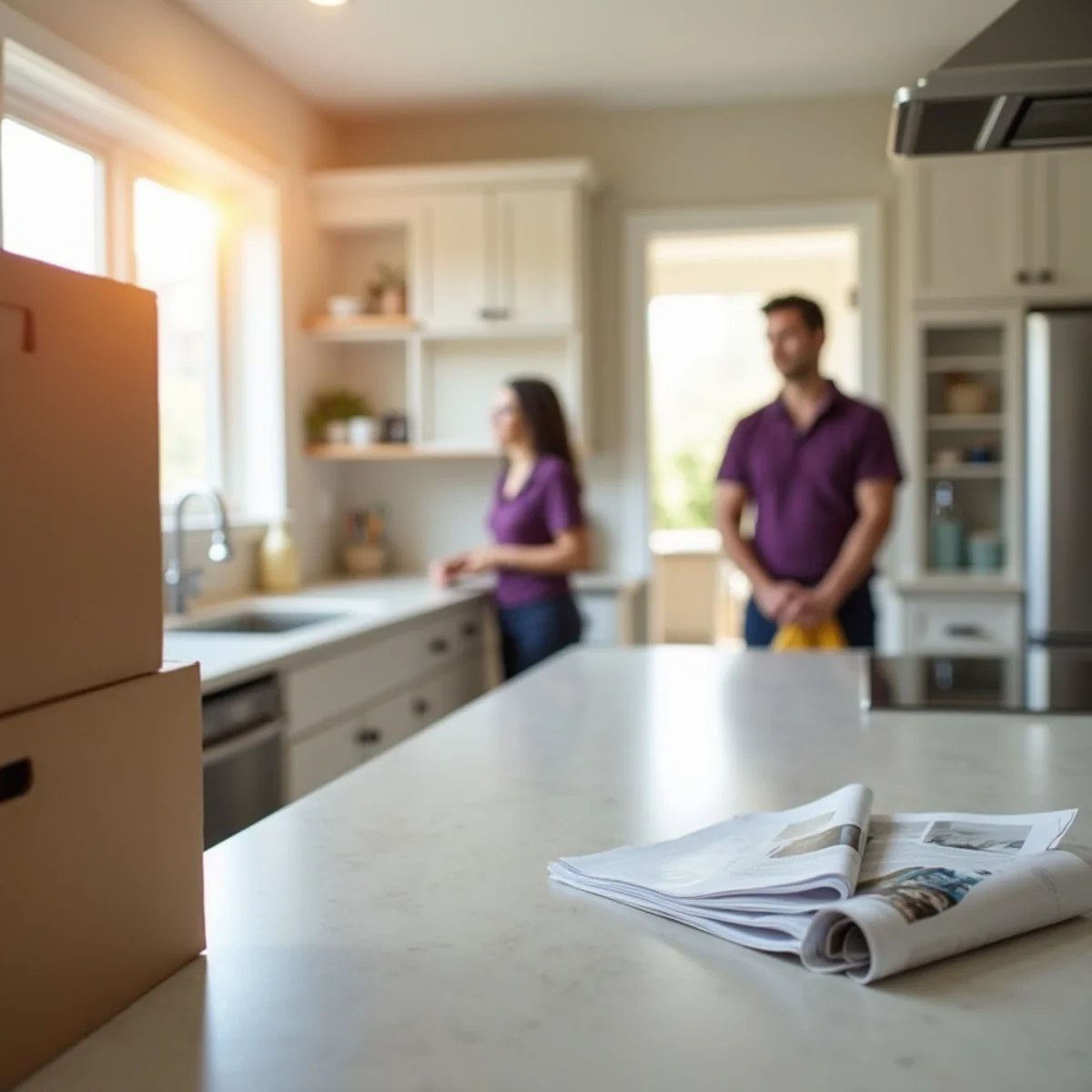
Move-In Cleaning Checklist Before Unpacking

You've got the keys, the truck is booked, and you're itching to get your new place set up. Here's the one thing worth doing first, before a single box comes off the truck: clean the whole house while it's still empty. It's the only window you'll ever get where every cabinet, closet, corner, and baseboard is completely reachable — no couch to slide, no bed frame to work around, no boxes stacked in the way.
It matters more here than most places. So many homes across the Treasure Valley are recent builds, and a new house is not a clean house. Fine drywall and construction dust settles into vents, cabinet interiors, window tracks, and every ledge, and it keeps resurfacing for months. Older Idaho homes come with their own layer of history — whatever the last owners left behind, plus years of our hard water and high-desert dust. Either way, an empty home is your best shot at a true reset.
This is a room-by-room move-in cleaning checklist you can work through yourself, in the right order, so you don't clean the same surface twice. If you'd rather hand it off and unpack into a home that's genuinely ready, that's one of our most-booked services — Sophisticated Cleaners is a chemical-free house cleaning company based in Meridian, and you can reach us at +1 877-754-5614 for a quote.
In this article
Why an Empty Home Is the Best Time to Deep Clean
Once your furniture lands, cleaning becomes a game of working around things. You wipe the parts of the cabinet you can see, mop the floor you can reach, and quietly agree never to look behind the fridge again. An empty home removes all of that. Every shelf is open, every floor is clear, and every corner a mop can't normally reach is right there in front of you.
There's a health angle too, and it's the one people underestimate. You're about to move your clothes into those closets, your dishes into those cabinets, and your kids or pets onto those floors. Whatever dust, residue, or grime is in the home right now becomes what you're living on top of. Cleaning first means you unpack into a fresh space instead of sealing the old one's leftovers underneath your stuff.
An empty walk-through is also the best time to spot the small stuff before it becomes a headache — a slow drain, a sticky window track, a vent that's never been touched, or a cabinet that smells off. You catch it now, with nothing in the way, instead of discovering it three weeks in behind a full pantry.
Get the Order of Operations Right
The single biggest time-saver is cleaning in the right sequence. Two rules cover it. First, work top to bottom in every room — ceilings, fans, and vents before shelves, shelves before floors — so falling dust lands on surfaces you haven't cleaned yet. Second, work through the rooms in priority order so the parts of the house you need first are ready first.
A clean-then-unpack plan usually looks like this: kitchen and bathrooms first (they take the longest and you'll want them working right away), then bedrooms and closets, then living areas, and floors last in each space. Doing floors dead last in a room, after everything above them is wiped, means you only mop once.
- Top to bottom, always: dust and vents first, floors last, in every single room.
- Kitchen and bathrooms before anything else — they need the most time and you'll use them day one.
- Closets and cabinets while they're empty — you'll never have easier access.
- Floors are the final step in each room, once all the dust above them has settled.
- Do it before the movers arrive, or at least before you unpack, so nothing blocks a surface.
Kitchen: Appliances, Cabinets, and Counters
The kitchen earns first place because it's the most detailed room and the one with the highest hygiene stakes. Start with the cabinets and drawers while they're empty — wipe the insides, the shelves, and the exteriors, including the tops of the upper cabinets where dust and cooking grease quietly collect. In a new build, expect a film of fine construction dust inside every cabinet even if it looks clean.
Then move to the appliances, inside and out. This is the work that's nearly impossible to do well once the kitchen is stocked, so it's worth the time now.
- Refrigerator and freezer: wipe every shelf, drawer, and door seal inside and out, and pull it out to clean behind and underneath if you can do so safely.
- Oven and stovetop: clean the interior, racks, and glass door; degrease the burners, grates, and range hood filter.
- Microwave and dishwasher: wipe the microwave inside and out, and run an empty dishwasher cycle to clear out anything left behind.
- Cabinets, drawers, and pantry: wipe interiors, shelves, and exteriors, plus the tops of the uppers.
- Counters, backsplash, and sink: wipe down surfaces, then descale the hard water spots on the faucet and scrub the sink and drain.
- Floor: sweep and mop last, including under the fridge and stove.
Bathrooms: Fixtures, Grout, and Hard Water
Bathrooms are the second priority, and in Idaho they come with a local wrinkle. Treasure Valley hard water leaves chalky mineral spots on glass, faucets, and fixtures that a quick wipe won't shift, and if the previous owners let it build up, a new-to-you shower can look permanently cloudy when it's really just mineral haze. This is where a little extra scrubbing pays off, and if the buildup is past a normal clean, a deep cleaning is the faster fix.
Clean and disinfect everything before your toothbrushes and towels move in. An empty bathroom is easy to get right; a stocked one never gets the same attention again.
- Shower and tub: scrub away soap scum, mildew, and hard water film, and brighten the grout.
- Glass doors and tile: clear the cloudy mineral haze until the glass is actually clear.
- Toilet: clean and disinfect the bowl, tank exterior, seat, hinges, and the base and floor around it.
- Sink, vanity, and faucet: descale the fixtures and wipe out the cabinet and drawers before you fill them.
- Mirror, fixtures, and exhaust fan: streak-free glass, and dust the light fixtures and fan cover.
- Floor and baseboards: sweep, mop, and wipe the baseboards along every wall.
Closets, Floors, Vents, and Switches
With the two hardest rooms done, the rest of the home moves fast — and this is where an empty house really earns its keep. Closets are the obvious one: wipe every shelf, rod, and floor before your clothes and boxes go in, because you won't reach them again until the next move. The same goes for the surfaces people skip in a lived-in home but can finally get to now.
Vents and returns deserve special attention in newer Idaho homes. Construction dust hides in the ductwork and on vent covers long after the builder's final clean, and running the HVAC just circulates it. Wipe the covers, and it's a smart moment to swap the air filter so you're not blowing old dust through your new home.
- Closets: wipe shelves, rods, and floors while they're completely empty.
- Air vents, returns, and filter: dust or wipe every cover, and replace the HVAC filter.
- Ceiling fans and light fixtures: dust the blades and wipe the covers before you touch the floors.
- Light switches, outlet plates, and door handles: wipe the spots everyone touches and no one cleans.
- Windows, sills, and tracks: clean the glass, then vacuum and wipe the tracks where dust and dead bugs collect.
- Walls, doors, and baseboards: spot-clean scuffs and damp-wipe baseboards throughout.
- Floors last: vacuum carpet thoroughly, and sweep and mop hard floors as the final step in each room.
New-Construction Dust Is a Different Job
If you're moving into a brand-new home — the kind going up all over Meridian, Star, and the wider valley — know that a builder's final clean and a real move-in clean are not the same thing. Construction dust is superfine drywall and sanding residue, and it behaves nothing like household dust. It settles into vents, cabinet interiors, window tracks, and light fixtures, and it keeps drifting back onto surfaces for weeks. Wipe a ledge, come back the next day, and there's a fresh layer.
The trick is to capture it, not chase it. Damp-dusting instead of dry-dusting traps the particles instead of sending them airborne to resettle, and working top to bottom keeps you from redoing finished surfaces. If the home was recently completed and still feels gritty everywhere you touch, that's a job for post-construction cleaning rather than a standard wipe-down.
This is a big part of what we do locally, because so many valley homes are new. We clean move-ins across Meridian, Boise, and Star, and we know where new-build dust hides and how to get it out for good.
DIY or Hire It Out? How to Decide
Doing it yourself makes sense when the home is small, in decent shape, and you've set aside a full day before the truck arrives. With this checklist, an empty apartment or a well-kept house is very doable in an afternoon — and there's real satisfaction in unpacking into a space you know is clean top to bottom.
Hiring it out makes more sense when the move is already eating your whole week, the home is large, or it needs more than a surface pass — heavy new-construction dust, years of the previous owner's grime, or hard water buildup that's set in. A professional move-in cleaning is built for exactly that, and it frees you to focus on the move itself. We use chemical-free, non-toxic products on every clean, so you and your family walk into a fresh, fume-free home rather than one that smells like it was scrubbed with a chemistry set. Call +1 877-754-5614 and we'll confirm the price before anything's booked.
Want it done for you?
Chemical-free house cleaning across Idaho. Free quotes, no obligation.